
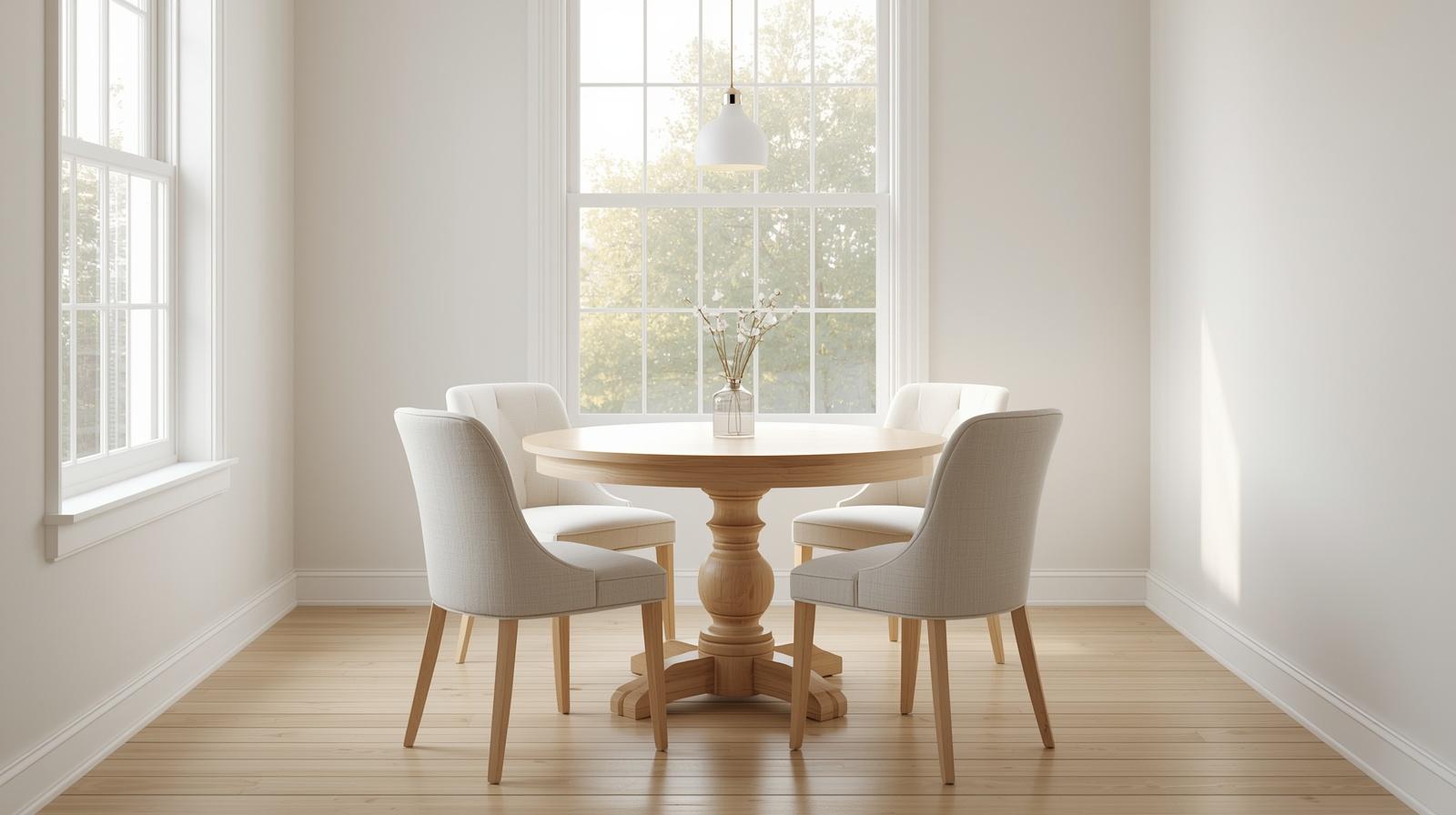
1. Round Table for Easy Flow
Forget clear mirrors — smoked, bronze-tinted, or grey-tinted mirrors bring an entirely different energy to a dining room wall. The subtle darkening of the reflection adds depth and sophistication without feeling heavy. Mount one large smoked mirror above a sideboard or console and watch it transform an ordinary dining wall into something that feels like a high-end restaurant with serious interior design intention.
2. Built-In Banquette Seating Along the Wall
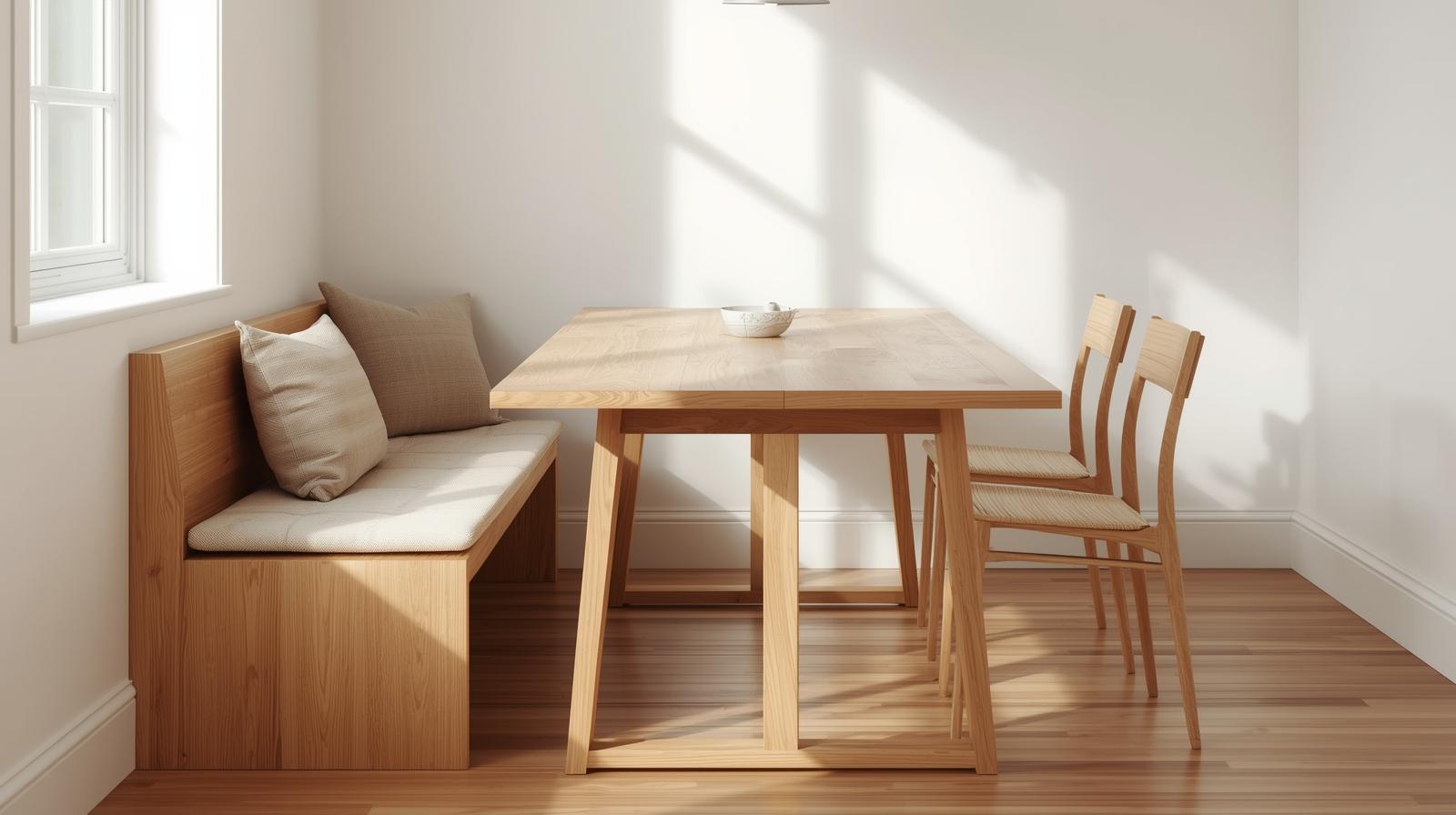
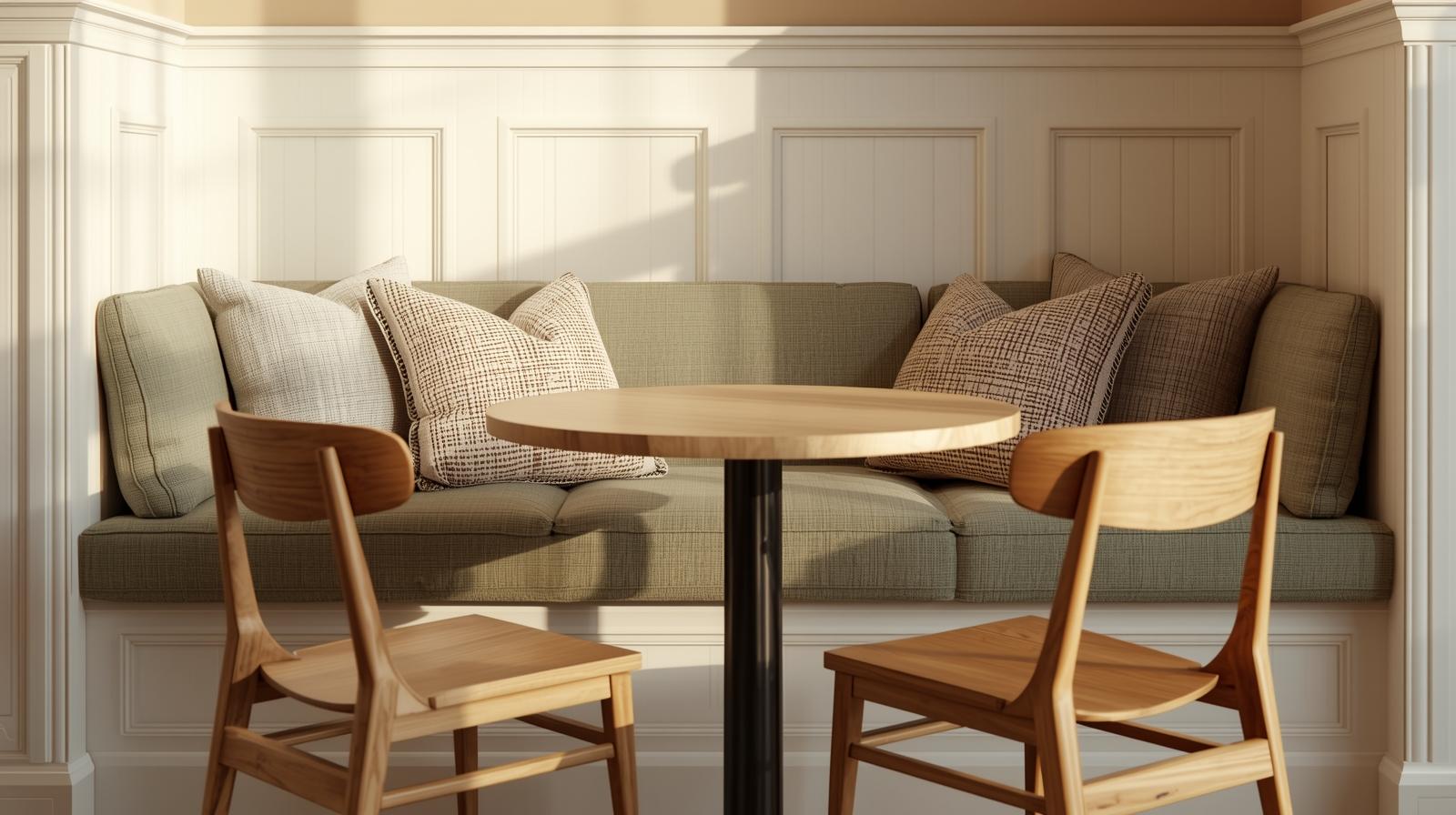
A built-in banquette transforms a tight dining corner into a space-efficient and visually charming seating solution. Tucked flush against the wall, it eliminates the need for chairs on one or two sides, instantly freeing up precious floor space. Add storage drawers beneath the bench seat for bonus functionality. Style it with a mix of cushions and throw pillows in linen or cotton for a cozy, café-inspired atmosphere that feels both designed and practical.
3. Wall-Mounted Drop-Leaf Table
A wall-mounted drop-leaf table is the ultimate space-saving dining solution for truly tiny homes. When not in use, it folds completely flat against the wall, reclaiming the entire floor area. When open, it provides a functional surface for two to four people. Choose a natural wood or white painted finish to blend seamlessly with the wall. Pair it with stackable or foldable chairs that store nearby for a completely flexible, clutter-free dining setup.
4. Oversized Mirror to Expand the Space
Hanging a large mirror on the main dining room wall is one of the most effective visual tricks for making a small space feel dramatically bigger. It reflects light, duplicates the depth of the room, and adds a sense of grandeur that punches well above the room’s actual square footage. Choose a full-length rectangular or arched mirror in a slim gold or black frame. Position it to reflect the table setting and any natural light source in the room.
5. Slim Console Table as a Sideboard
In a tiny dining room, a full-sized sideboard or buffet is simply too bulky. A slim console table offers the same surface functionality at a fraction of the visual weight. Use it to hold serving dishes, a small lamp, or decorative objects. Choose a design in natural cane, light wood, or black metal to keep it feeling lightweight and intentional. Style the surface minimally — one plant, one candle, one object — to avoid the narrow space feeling crowded.
6. Pendant Light as a Dramatic Focal Point
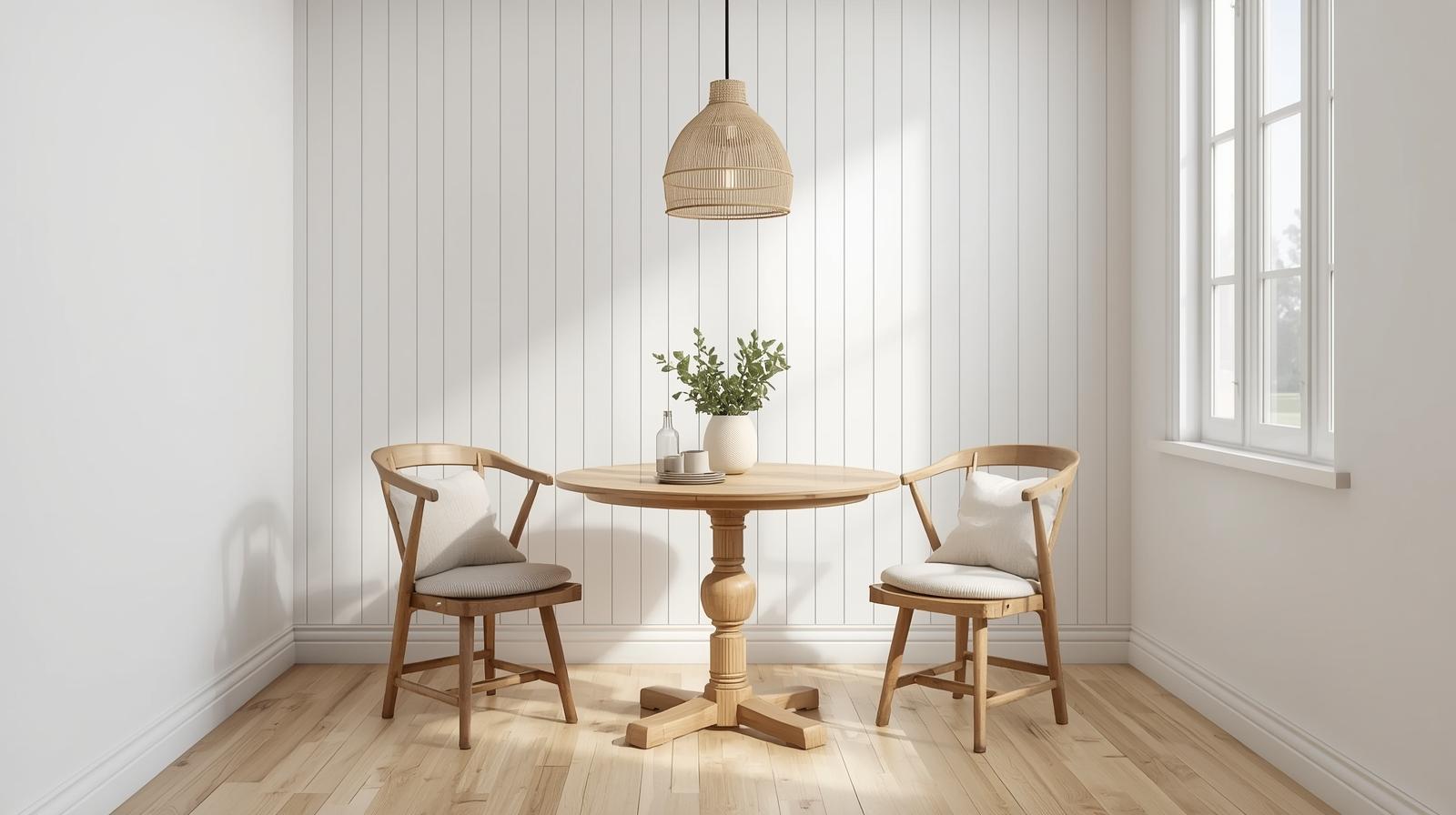
In a small dining room where floor space is limited, the ceiling becomes valuable design real estate. A single striking pendant light hung low over the dining table draws the eye upward and creates an intimate, restaurant-quality atmosphere. Choose a sculptural rattan globe, a matte black industrial shade, or a delicate glass dome. The pendant anchors the table visually, defines the dining zone within an open plan, and adds personality without consuming any floor space.
7. Floating Shelves Replacing a Sideboard
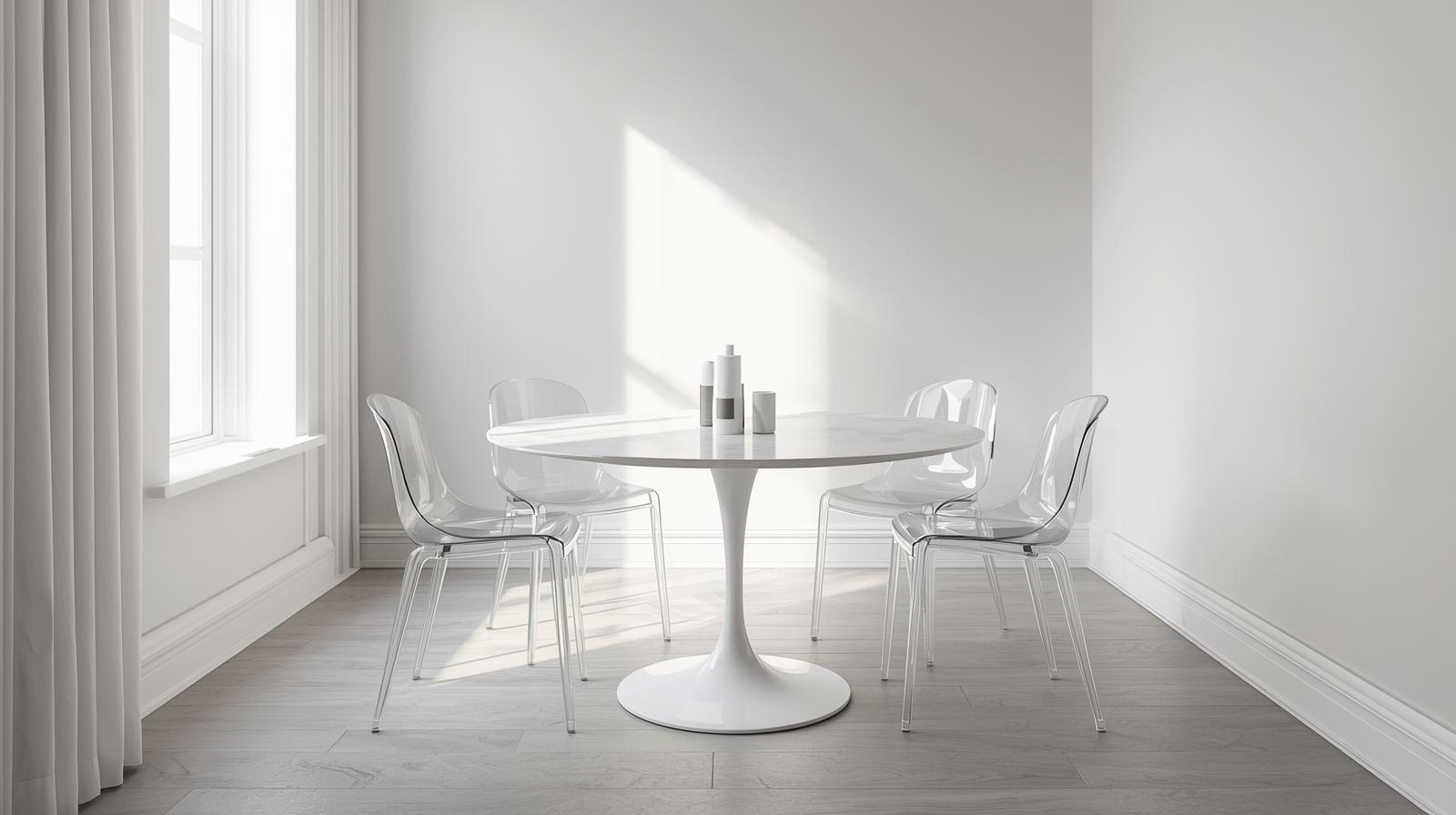
Replace a bulky sideboard with a set of floating shelves mounted directly on the dining room wall. They provide display and storage space for tableware, glassware, plants, and decorative objects without occupying any floor area. Style them with a mix of practical and beautiful items — stacked ceramic plates, a small trailing plant, linen napkins in a basket. The wall-mounted arrangement draws the eye across the room while keeping the floor completely open and breathable.
8. Transparent Ghost Chairs for Visual Lightness
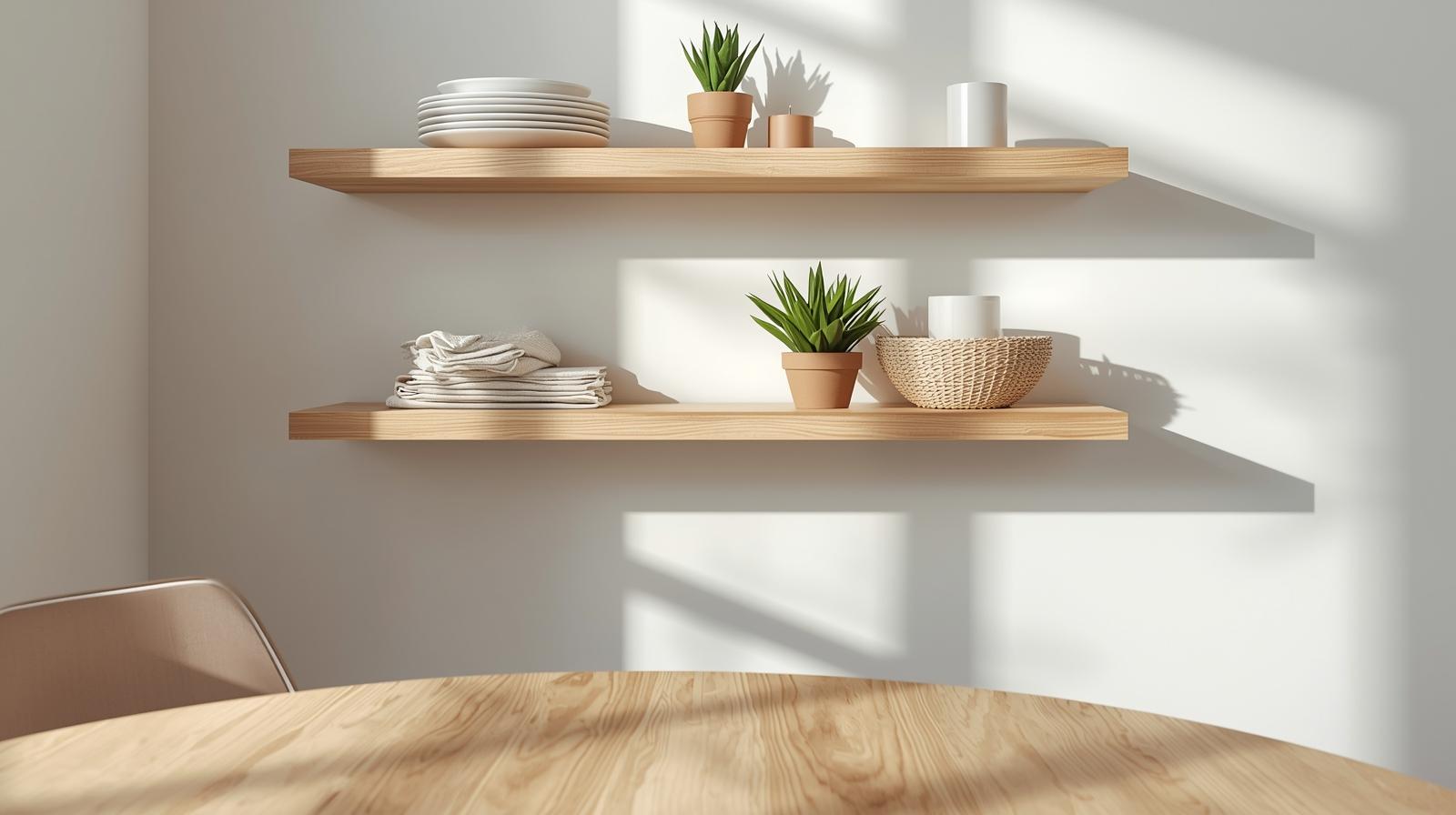
Furniture that you can see through is one of the most powerful tools in small space design. Clear acrylic ghost chairs around a dining table allow the eye to travel freely through the space without obstruction, making the room feel significantly more open and less crowded. Pair them with any table style — marble, wood, or painted — as their transparency makes them universally compatible. The result is a modern, airy dining area that feels almost twice its actual size.
9. Vertical Shiplap Wall for Depth and Texture
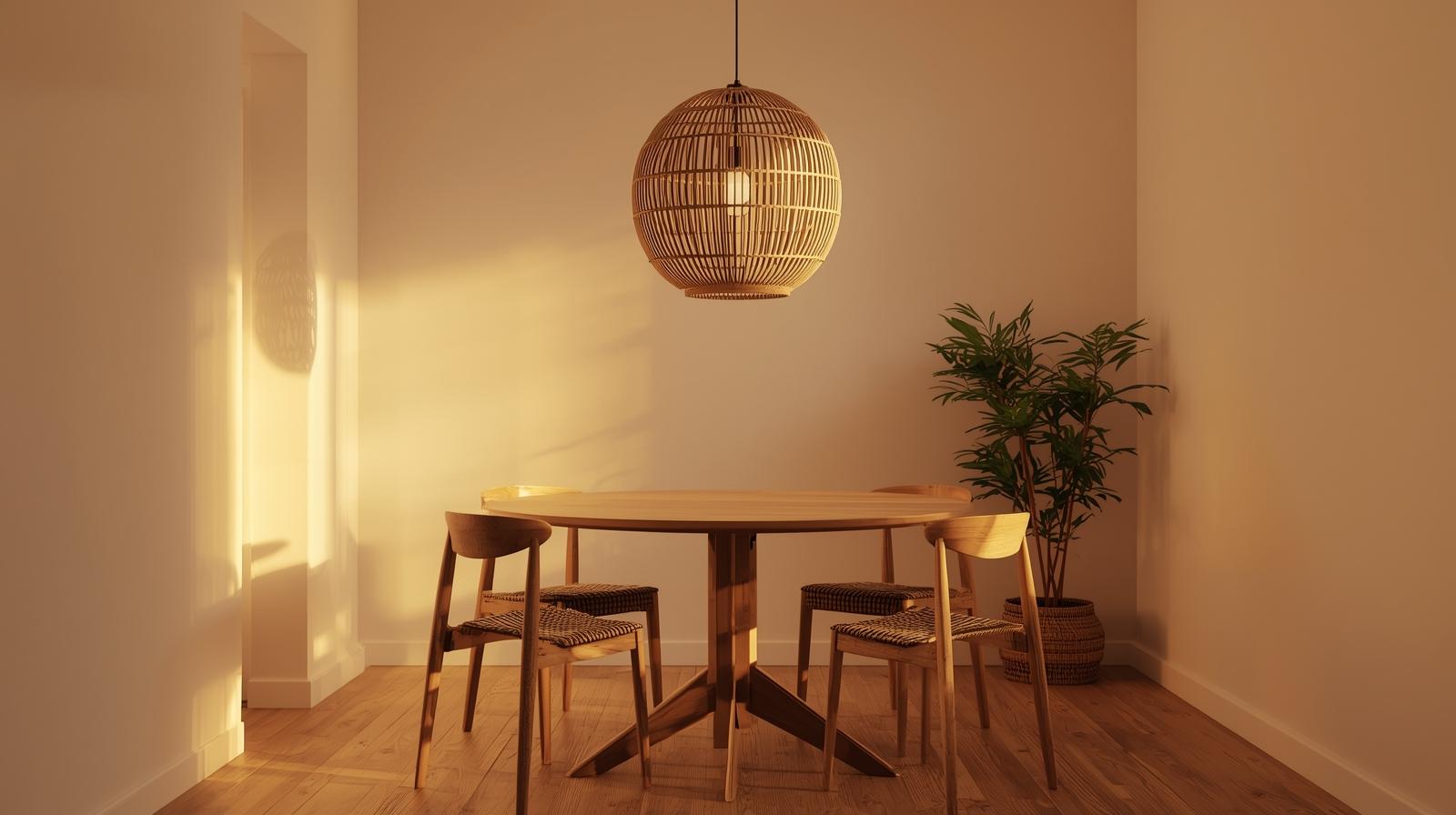
A vertical shiplap feature wall in the dining room adds architectural character and visual depth without requiring any additional furniture or accessories. Painted in soft white, warm cream, or pale sage, the vertical lines naturally draw the eye upward, making the ceiling feel taller and the room feel more generous. The texture of the boards adds warmth and dimension that flat painted walls simply cannot achieve, giving tiny dining rooms a distinctive, well-designed personality.
10. Bench on One Side of the Table
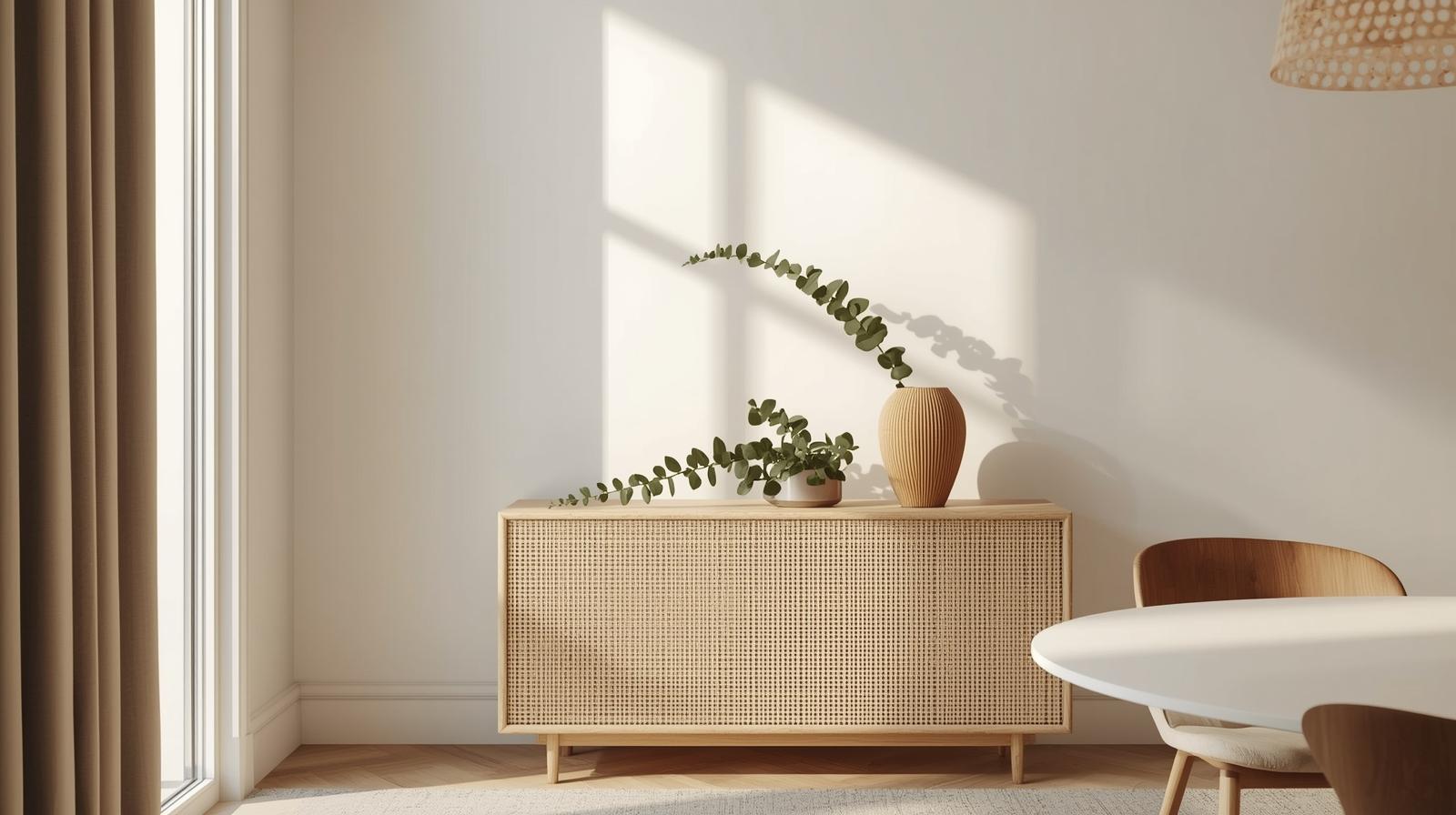
Replacing one or two dining chairs with a simple bench along one side of the table frees up visual space and creates a more relaxed, informal dining atmosphere. A bench tucks fully under the table when not in use, keeping the floor clear and the room navigable. Choose a bench in natural wood with a thin cushion in neutral linen or leather. The horizontal line of the bench adds a clean, architectural quality that feels modern and deliberately styled.
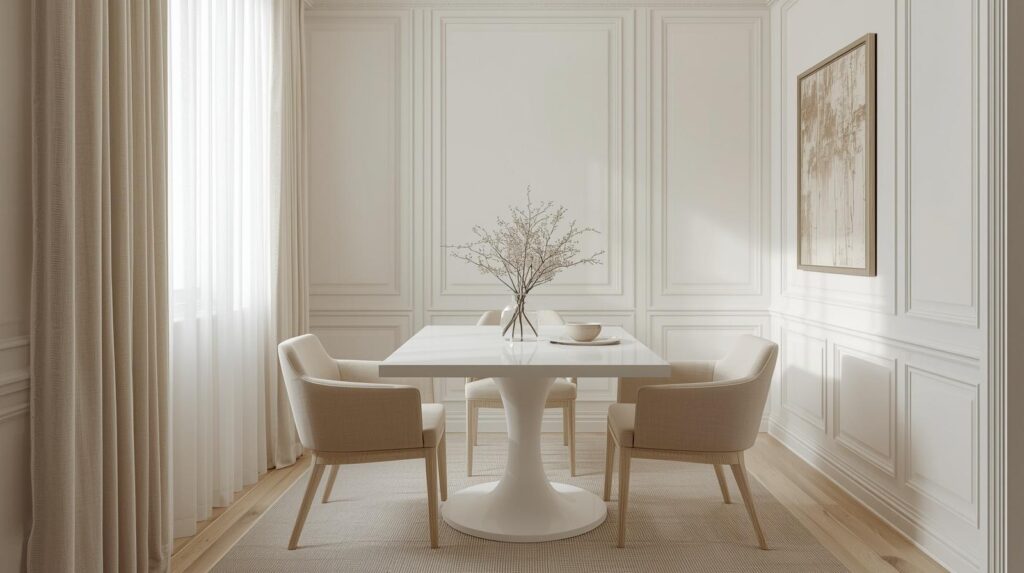
11. Monochromatic Color Scheme Throughout
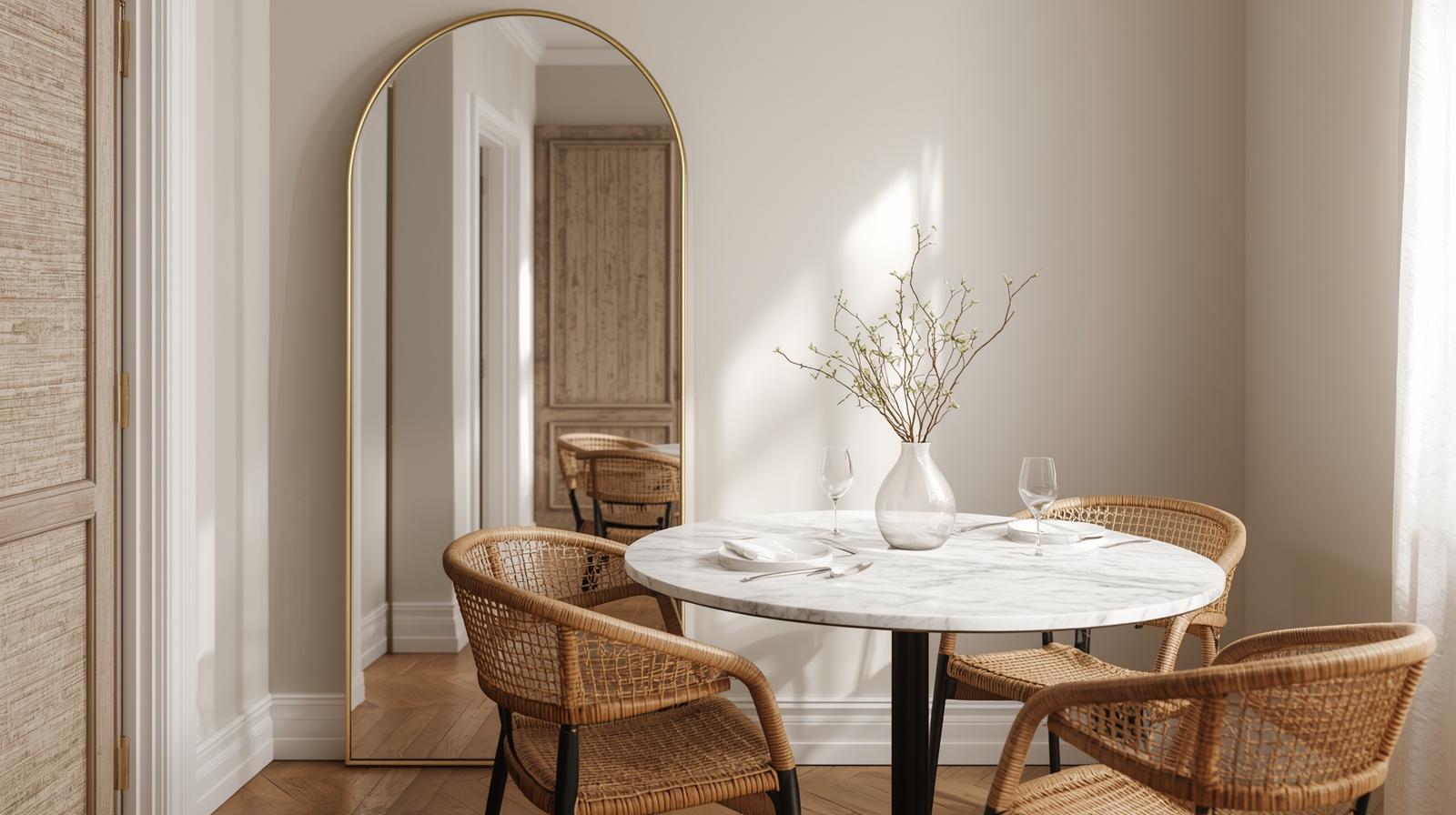
Dressing a tiny dining room in a single cohesive color palette — walls, furniture, and textiles all within the same tonal family — removes visual boundaries and makes the space feel seamlessly expansive. Try an all-white scheme with warm undertones, a full greige palette, or soft sage carried across every surface. When the eye cannot detect where one element ends and another begins, the perception of space increases naturally. Add depth through texture — linen, wood grain, matte ceramic — rather than contrasting color.
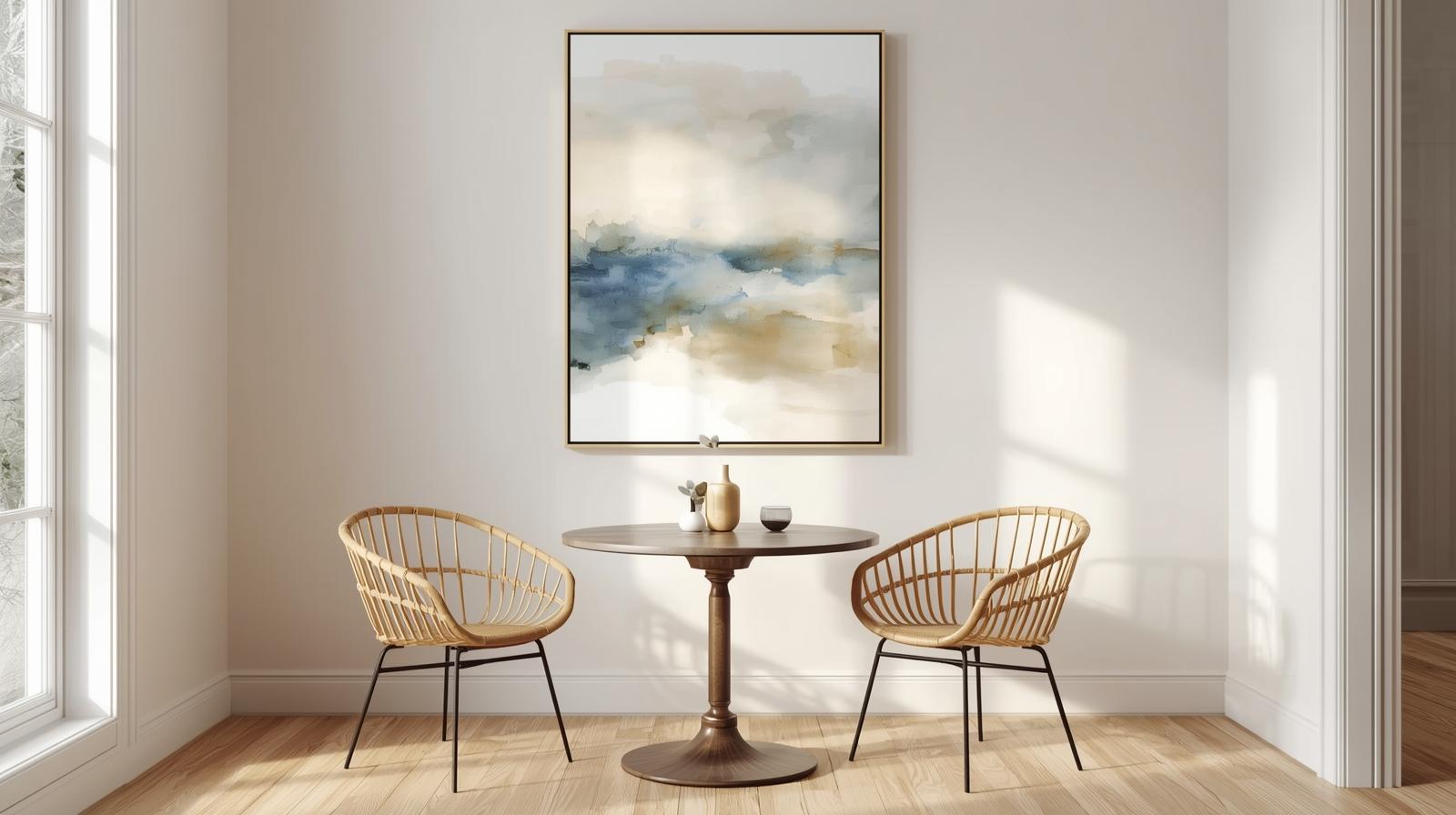
12. Artwork Scaled to the Wall, Not the Room
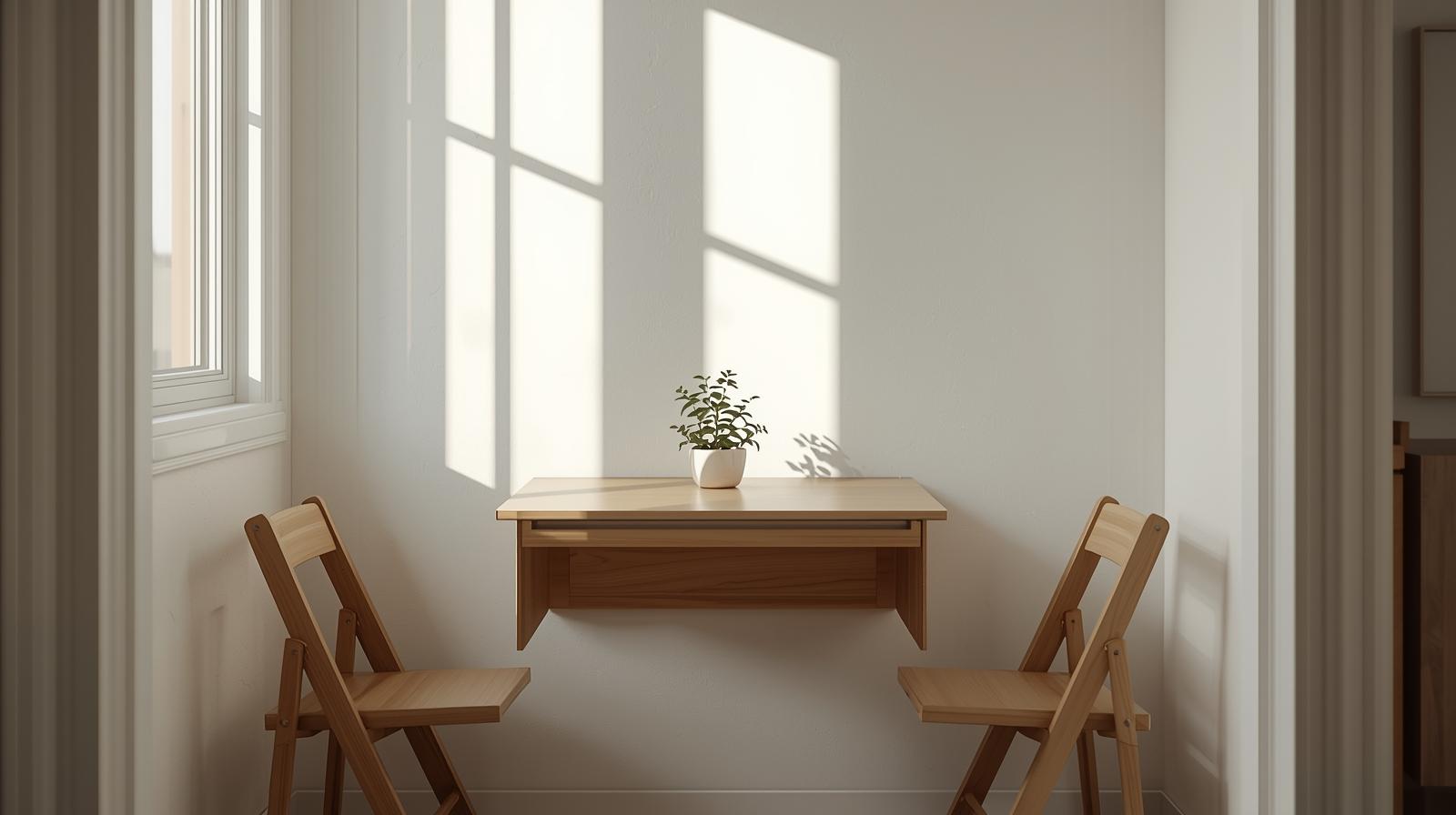
In a small dining room, the instinct is to choose small artwork — but this actually makes the space feel more cramped and unresolved. Instead, hang one large-scale piece that fills the majority of the wall. A single oversized print, canvas, or framed photograph creates a gallery-quality focal point that gives the room confidence and presence. Choose artwork with an airy composition — open landscapes, abstract washes, or minimal line drawings — to keep the mood light and spacious.
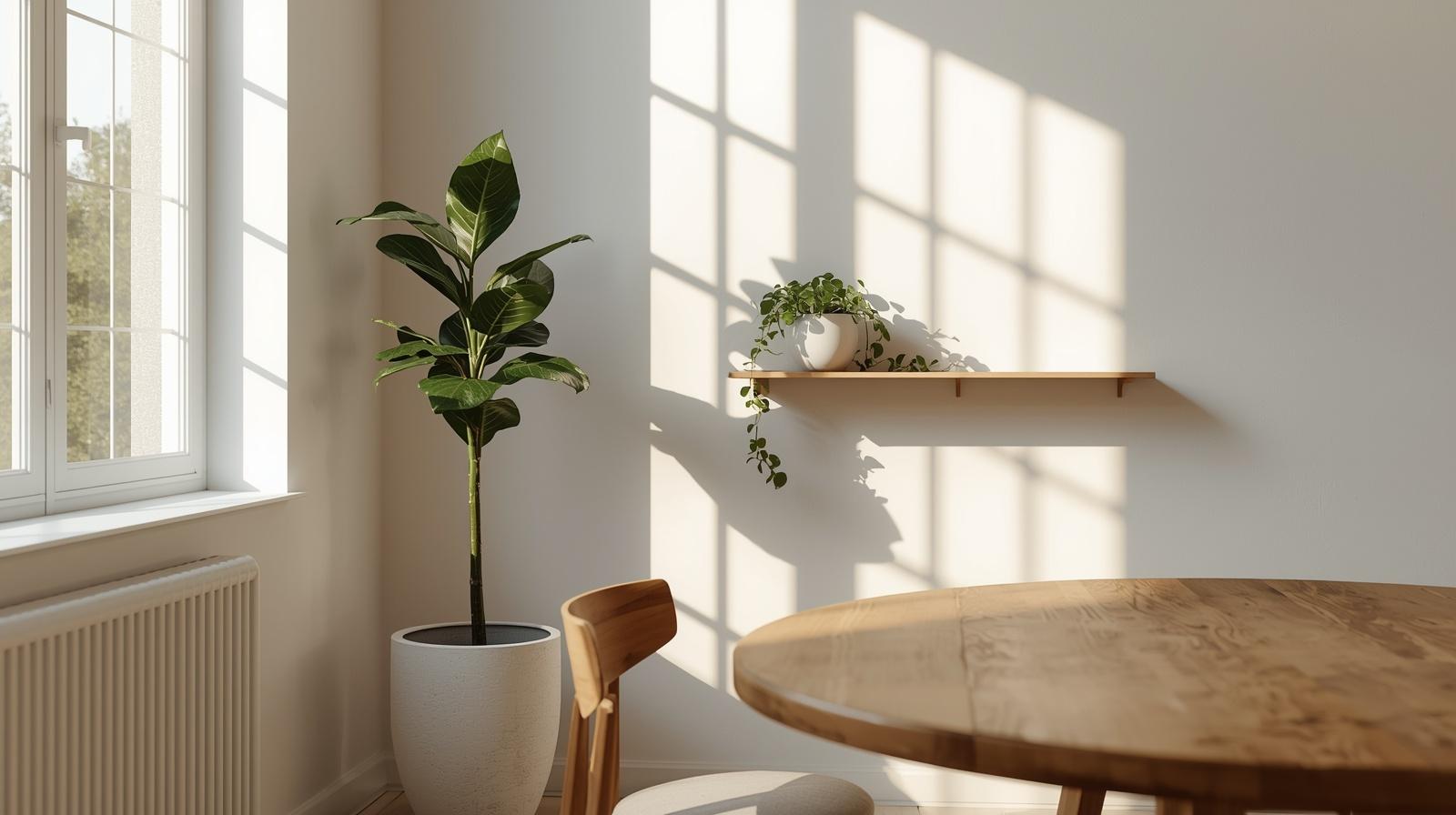
13. Strategic Use of Indoor Plants
A few well-placed indoor plants bring life, color, and organic warmth to a tiny dining room without consuming meaningful floor space. Choose a tall slender plant like a fiddle leaf fig or snake plant for a corner, and add a small trailing pothos on a floating shelf or windowsill. Plants introduce a natural layer of visual interest that softens hard surfaces and architectural edges, making the room feel curated, alive, and far more inviting than bare walls and furniture alone.
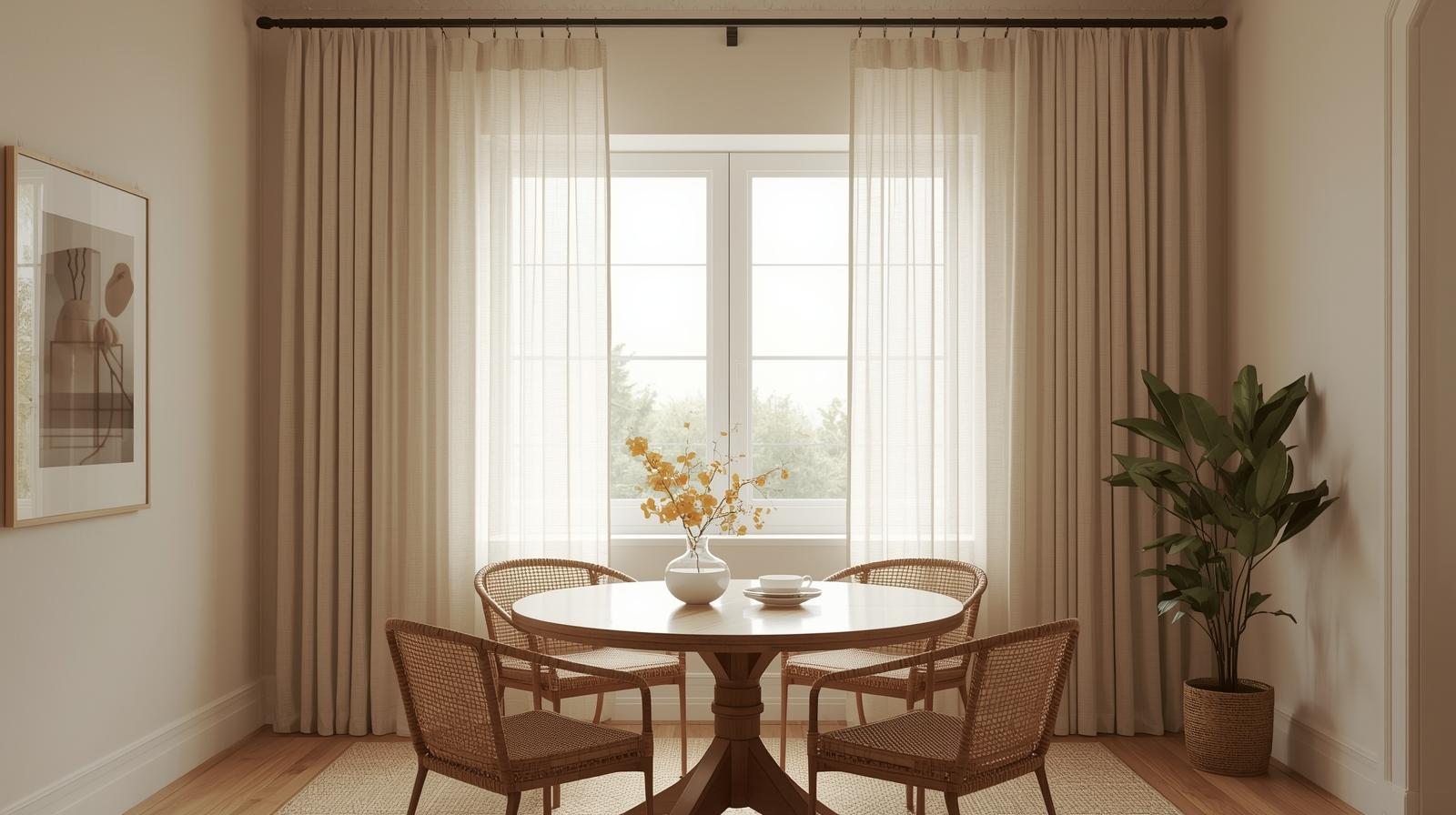
14. Curtains Hung High and Wide
Hanging curtains significantly higher than the window frame and extending the rod well beyond the window width on both sides is one of the most transformative optical illusions available in small space design. It makes windows appear larger, ceilings feel taller, and the entire room more grand and proportioned. Choose sheer linen or lightweight cotton in soft white or warm ivory. The flowing vertical panels frame the dining area beautifully while flooding the room with soft, diffused natural light.