
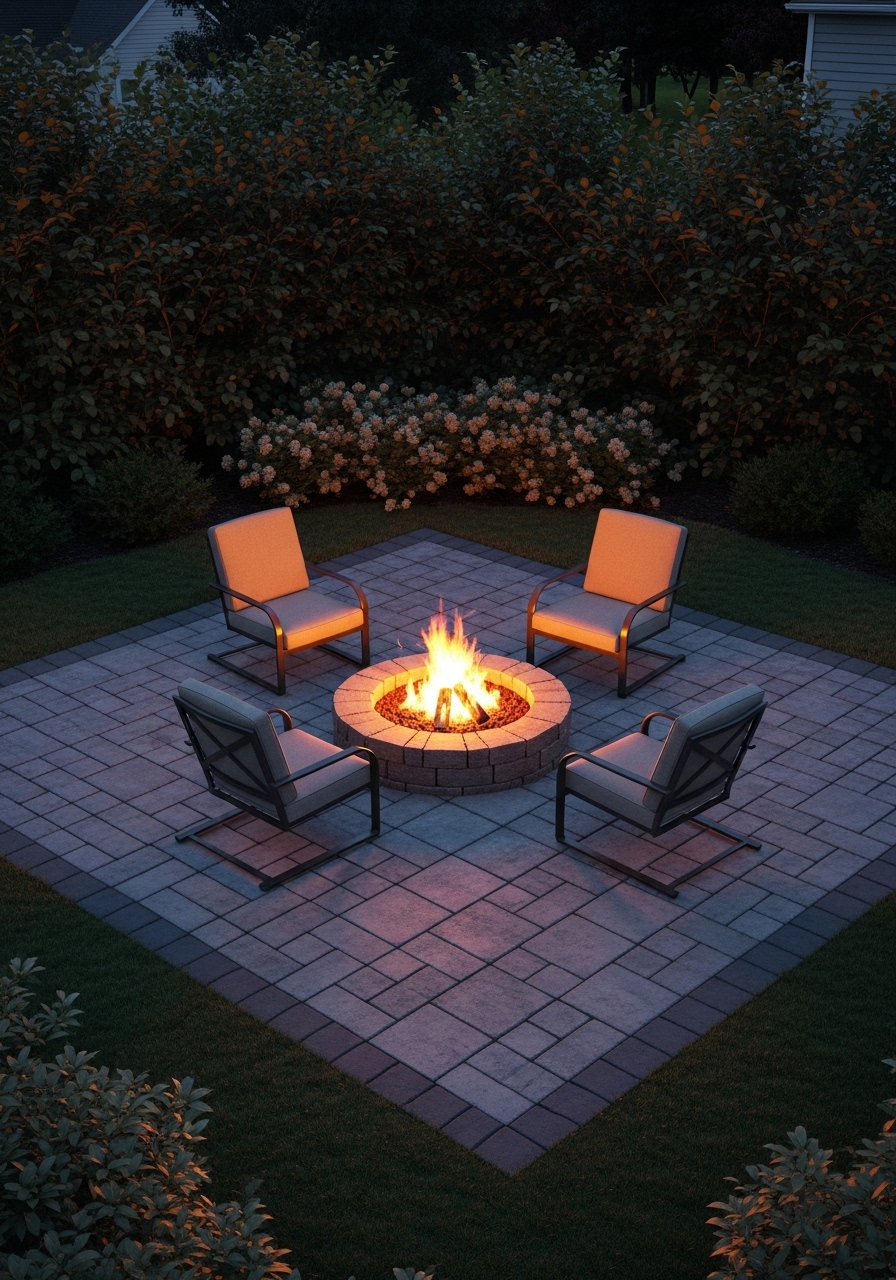
1. Matching Deck and Patio Colors
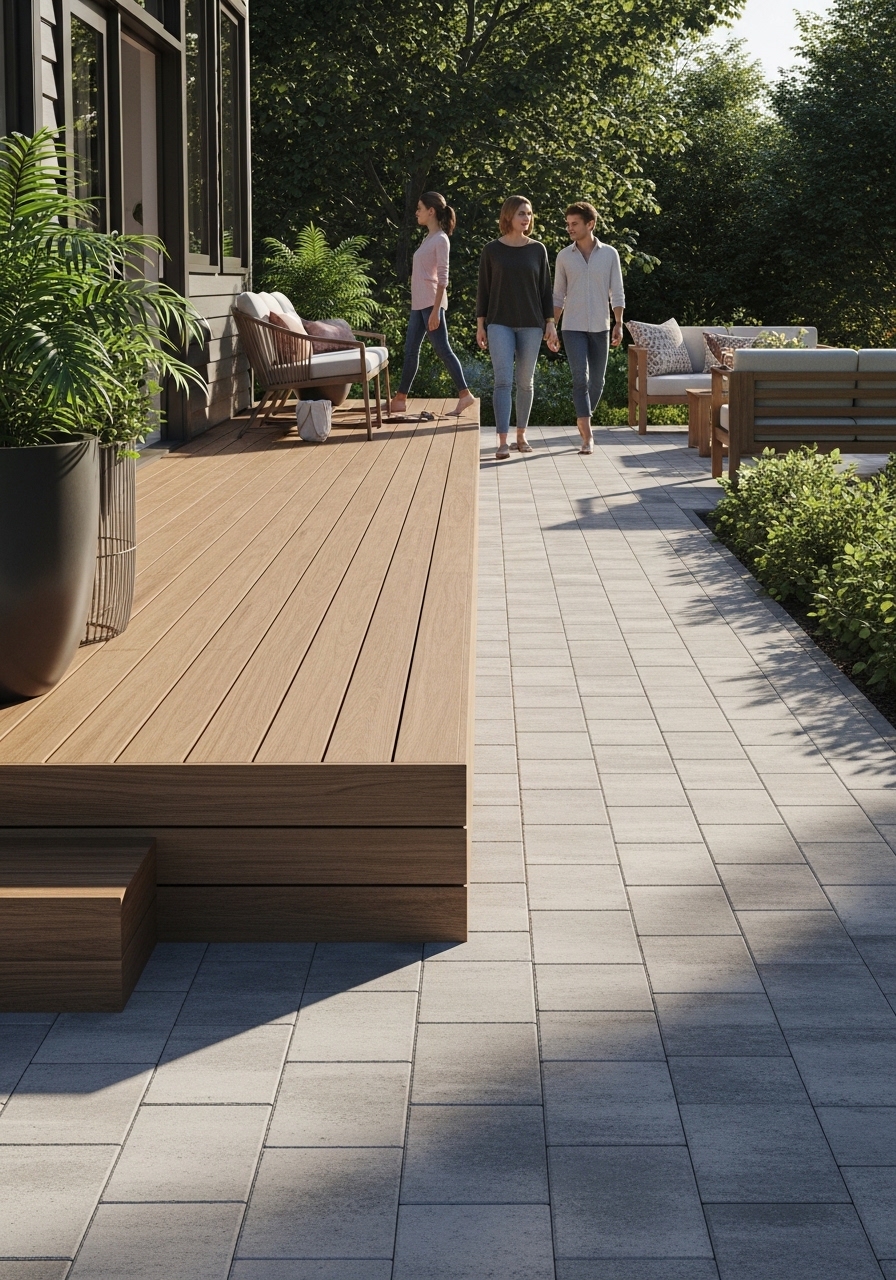
Use pavers that match your deck’s wood tones or stain color. This creates visual harmony and makes the transition seamless. The matching colors tie everything together beautifully. Your backyard will feel like one connected outdoor room instead of separate spaces. This simple choice instantly improves flow and makes everything look intentional and planned.
2. Curved Patio Border Flowing from Deck
Create a curved paver patio that gently flows out from your deck’s edge. Curved lines are softer and more inviting than straight angles. This design guides people naturally from deck to patio. The flowing curve makes your backyard feel larger and more connected. It’s a simple way to add elegance and movement to your outdoor space.
3. Herringbone Paver Pattern for Visual Interest
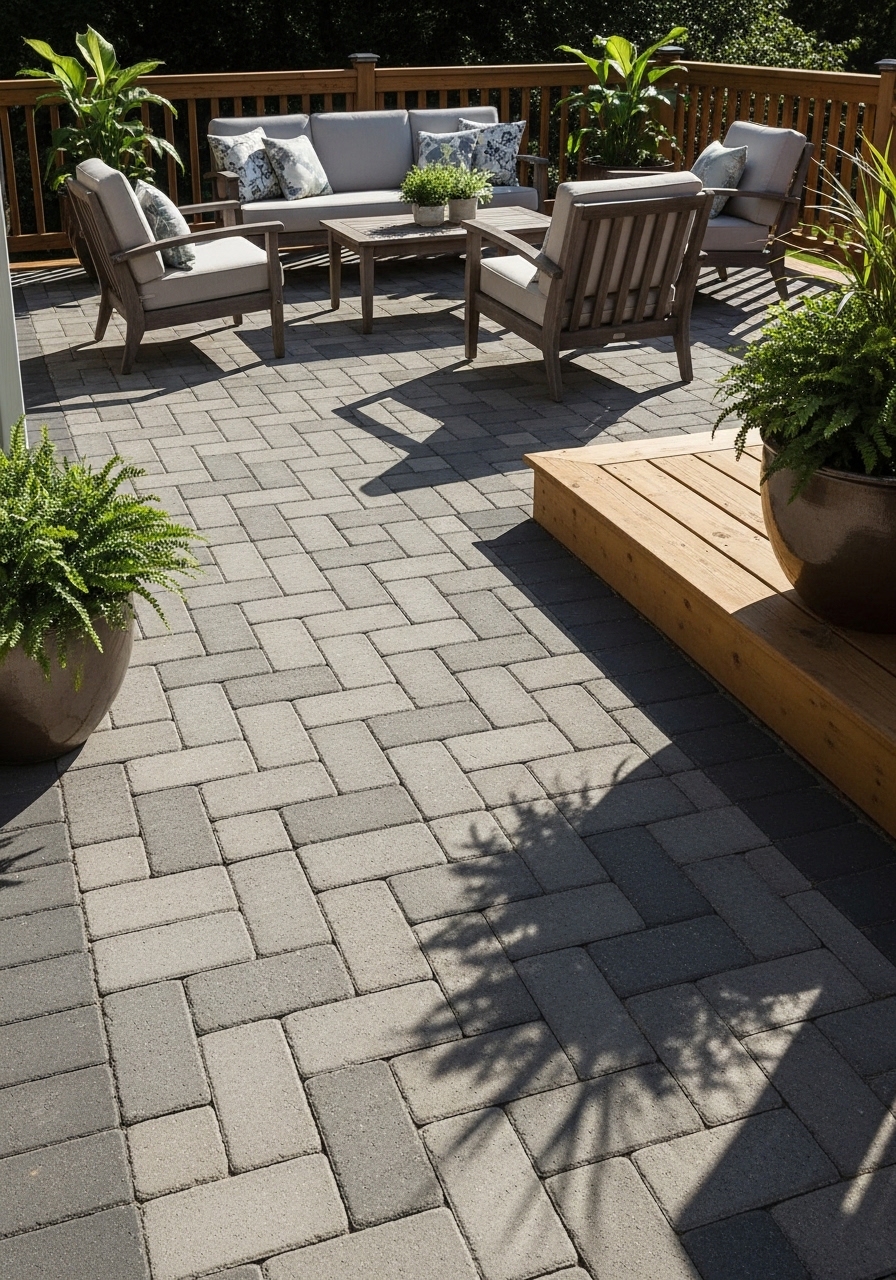
Lay pavers in a herringbone pattern to create movement and visual excitement. This classic pattern looks impressive but is surprisingly achievable. The diagonal lines draw eyes around your outdoor space beautifully. Herringbone adds sophistication without being complicated or expensive. It pairs perfectly with any deck style and instantly upgrades your patio’s appearance.
4. Border Pavers in Contrasting Color
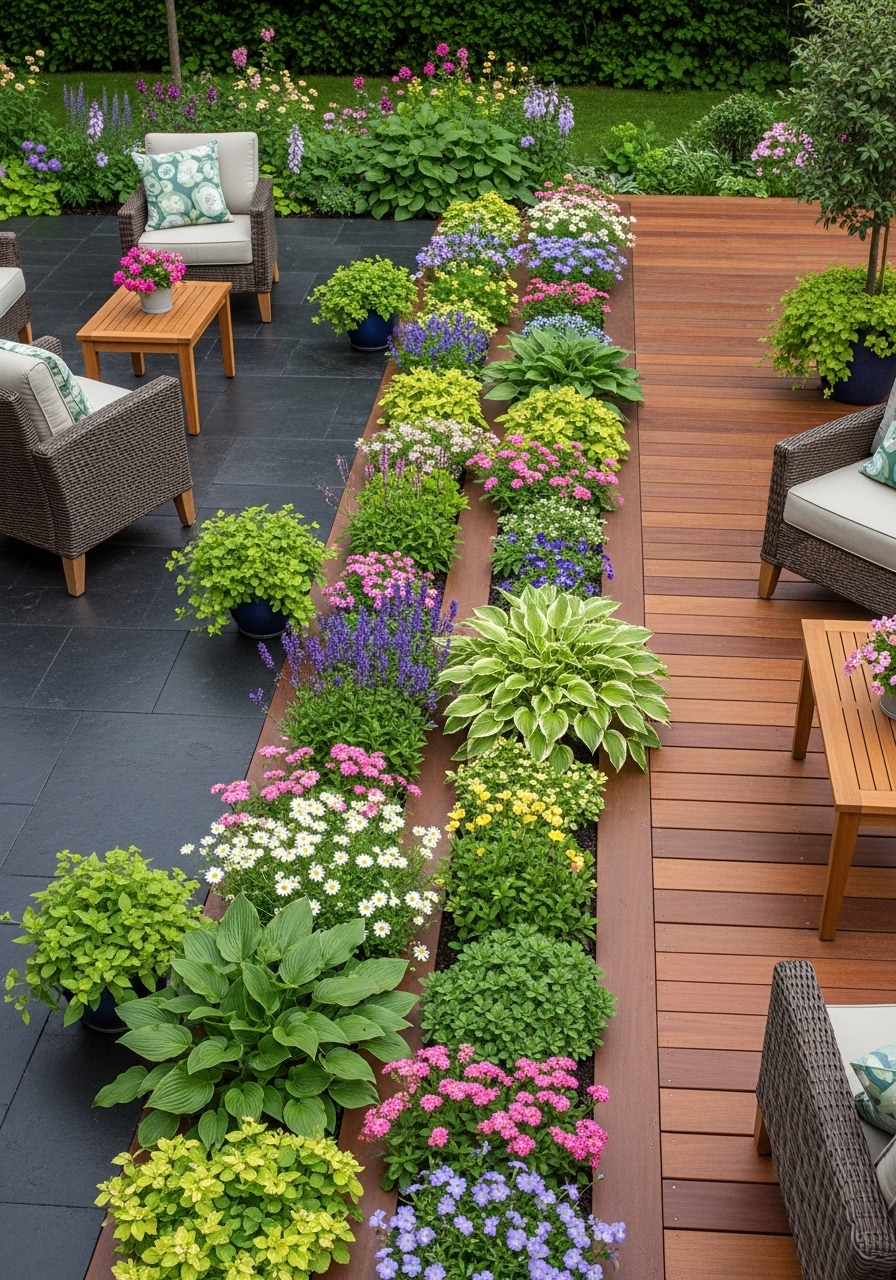
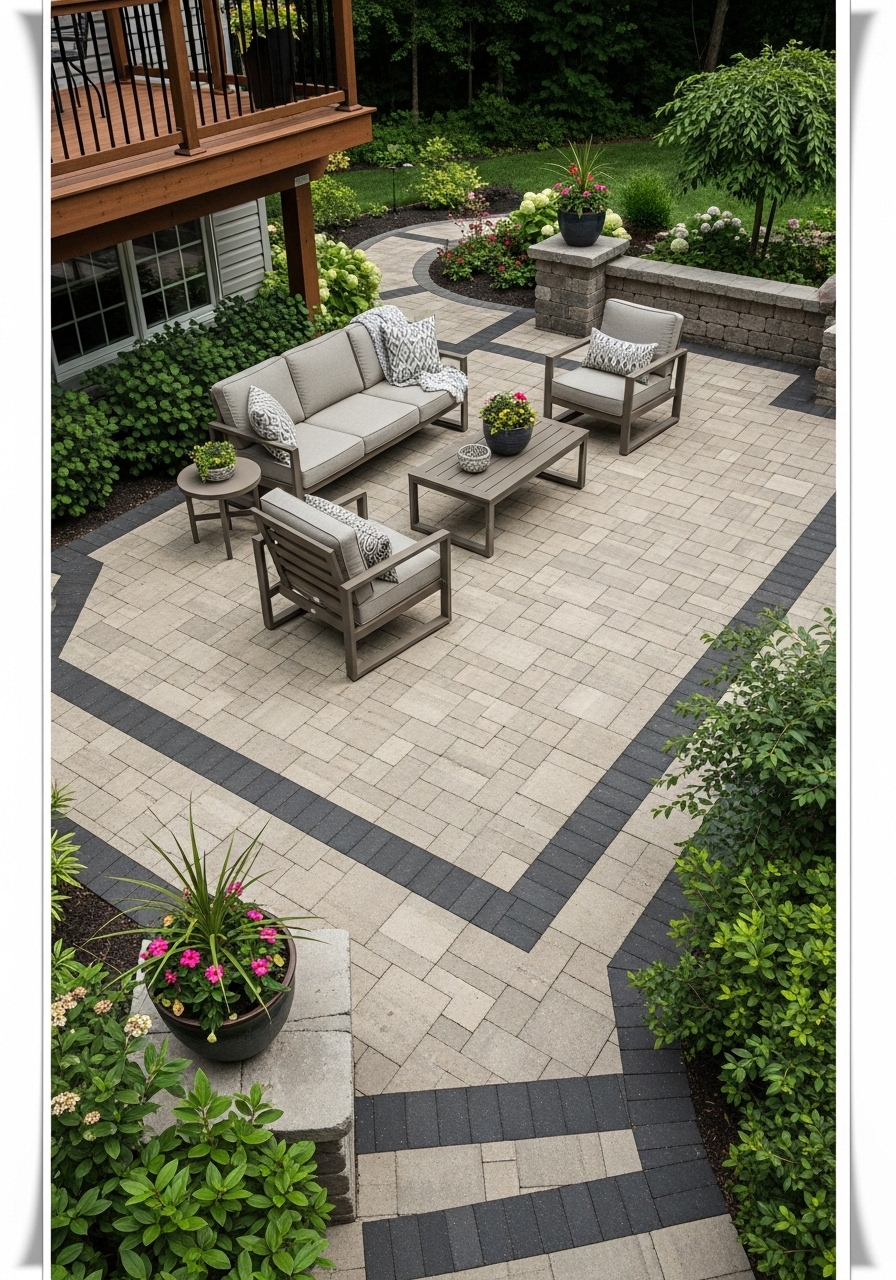
Add a decorative border of pavers in a different color around your main patio area. This frames your space beautifully and defines where deck meets patio. Contrasting colors create visual interest without being overwhelming. The border acts like a picture frame for your outdoor room. It’s an affordable way to add style and polish to your patio design.
5. Level Transition from Deck to Patio
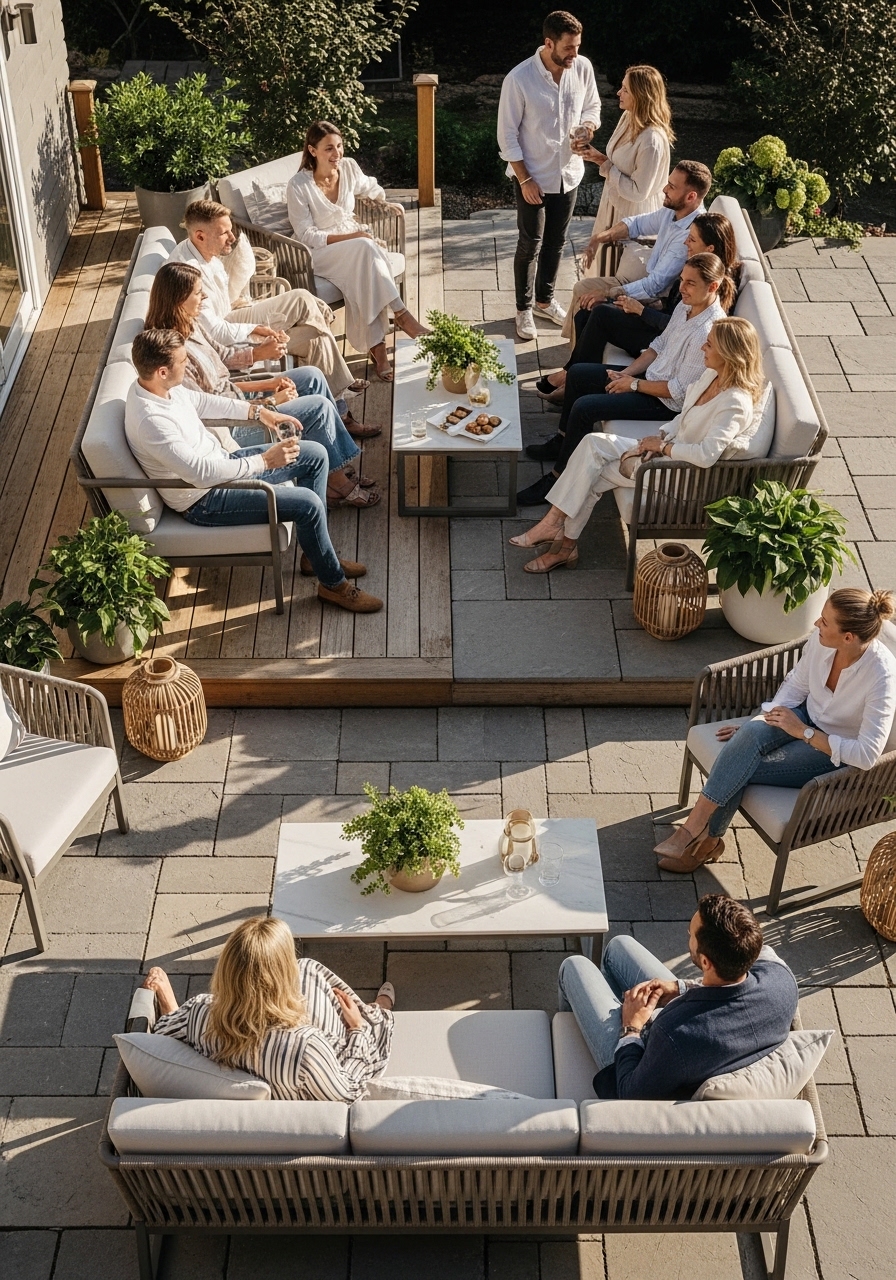
Ensure your deck and patio are at the same level for smooth, safe movement between them. This eliminates tripping hazards and makes the space flow naturally. Level transitions look cleaner and feel more connected. It’s one of the most important design elements for creating seamless flow. This makes entertaining and everyday use so much easier and safer.
6. Permeable Pavers for Eco-Friendly Design
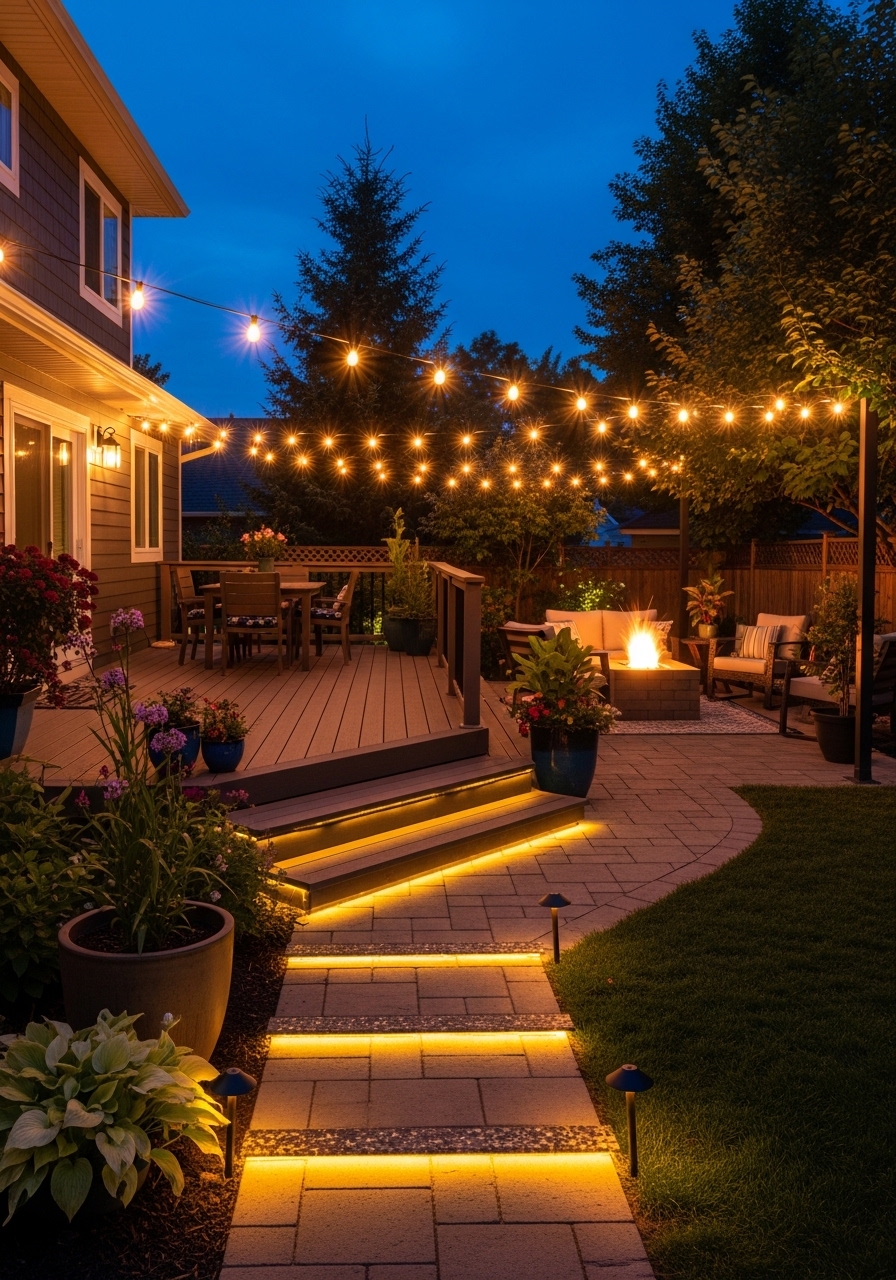
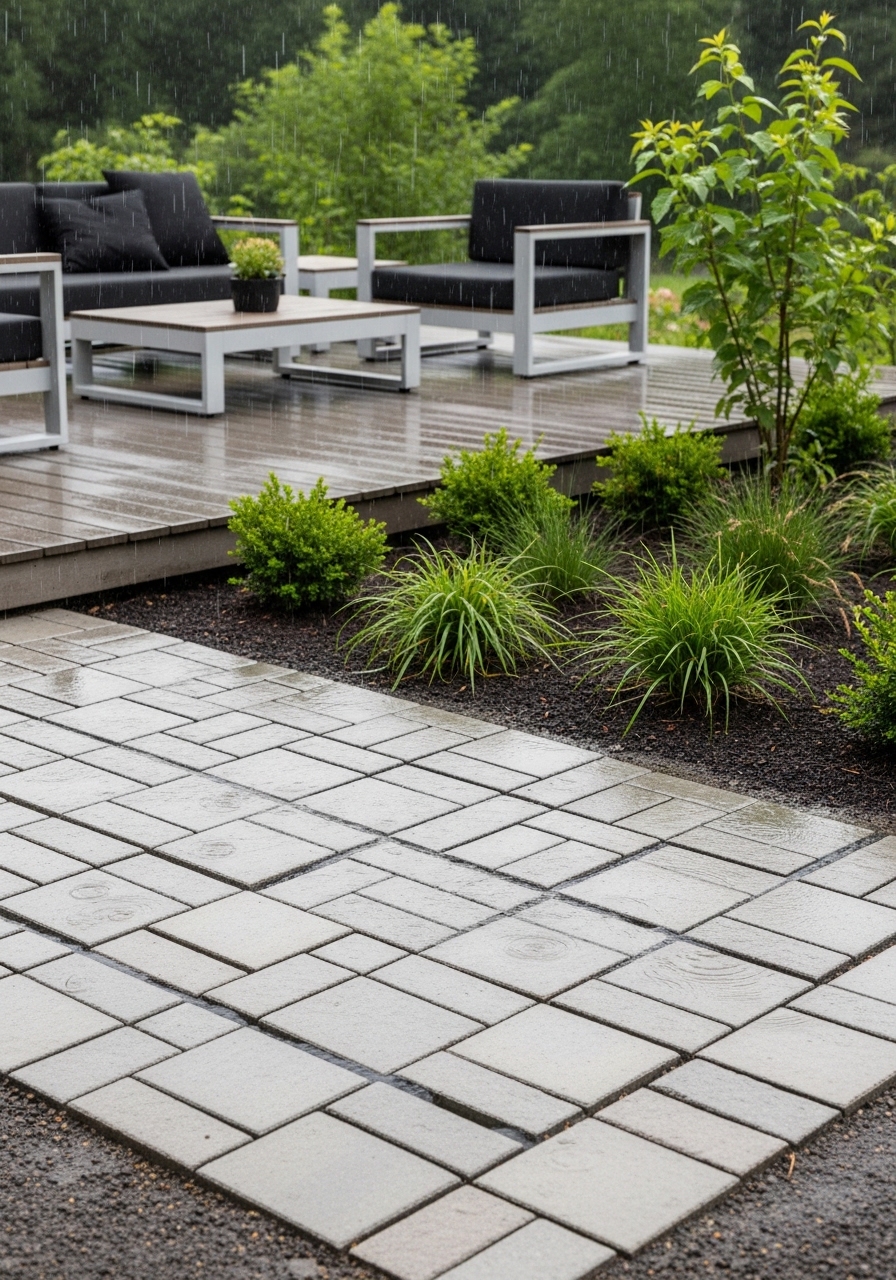
Choose permeable pavers that let water drain through instead of pooling. This is better for the environment and prevents puddles on your patio. Eco-friendly options look just as beautiful as traditional pavers. They’re perfect for creating a modern, sustainable backyard. This smart choice helps manage water while keeping your space gorgeous.
7. Mixed Paver Sizes for Dynamic Texture
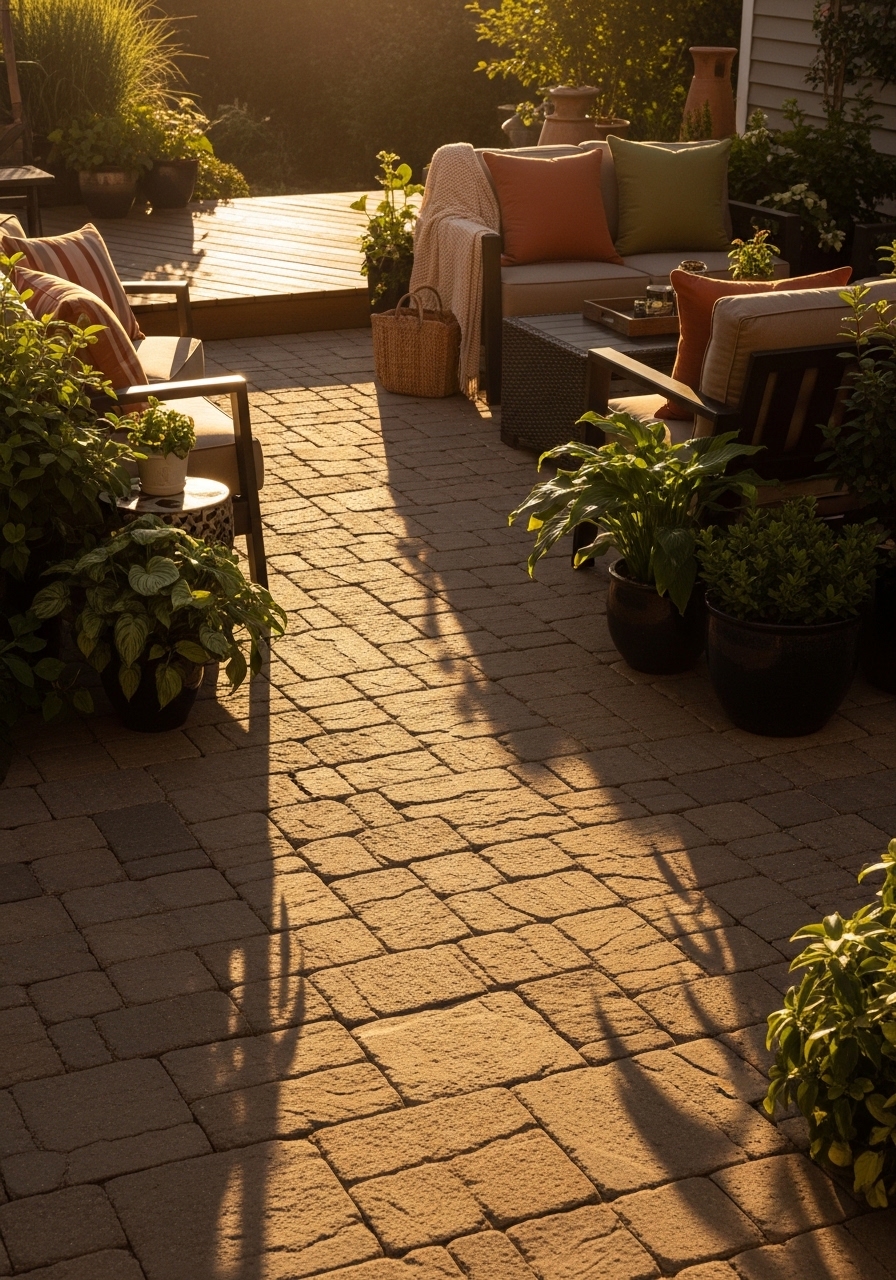
Combine different sized pavers in your patio design for added texture and interest. Mixing sizes creates a dynamic, interesting look that feels intentional. This approach hides imperfections better than uniform pavers. It adds visual depth and makes your patio feel more sophisticated. The varied pattern looks modern and is very Pinterest-worthy.
8. Lighting Elements Connecting Deck to Patio
Add outdoor lights that shine on both your deck and patio areas. Strategic lighting connects spaces and extends usable hours into evening. Lights can highlight the transition zone beautifully. Path lights, string lights, or uplighting create ambiance and flow. Good lighting makes your backyard feel bigger and more intentional while being functional and safe.
9. Planting Strips Between Pavers and Deck
Create narrow planting strips with flowers or low shrubs between your deck and patio. These plants soften the transition and add natural beauty. Planting strips are an easy, affordable way to blend hardscaping with nature. They bring color and life to the connection zone. Your backyard feels more garden-like and welcoming with greenery.
10. Unified Seating Area Spanning Both Spaces
Arrange outdoor furniture that naturally spans from deck to patio. This creates one unified gathering space rather than separate areas. When seating bridges both zones, people flow naturally between them. A conversation area that uses both surfaces feels larger and more intentional. This simple arrangement instantly improves how your backyard feels and functions.
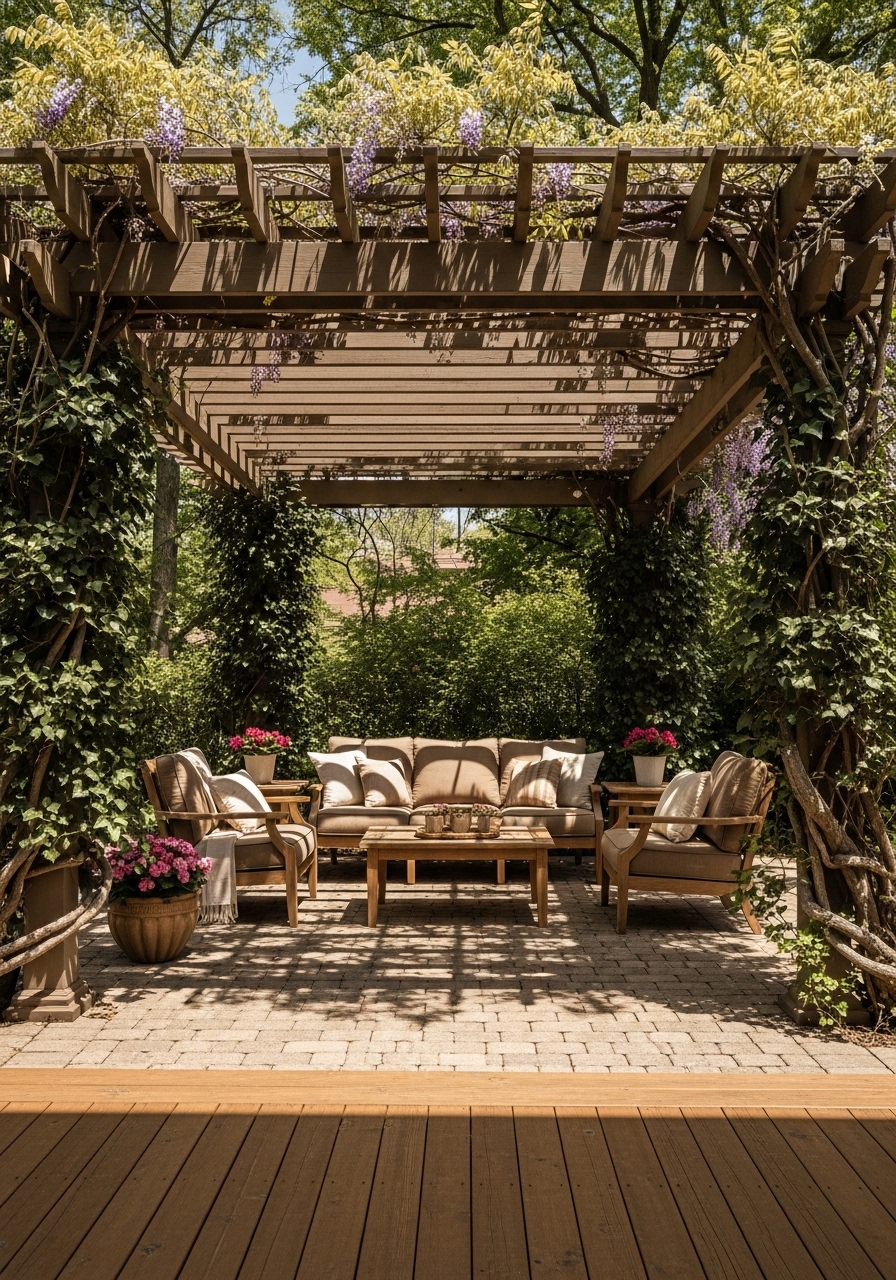
11. UShade Structure Covering Deck and Patio Edge
Install a pergola or shade structure that partially covers both deck and patio. This creates one shaded zone that unifies the spaces functionally. A pergola provides relief from sun and defines your outdoor room. Vines or shade cloth added gradually customize the amount of sunlight. This adds elegance while making your space more comfortable year-round.
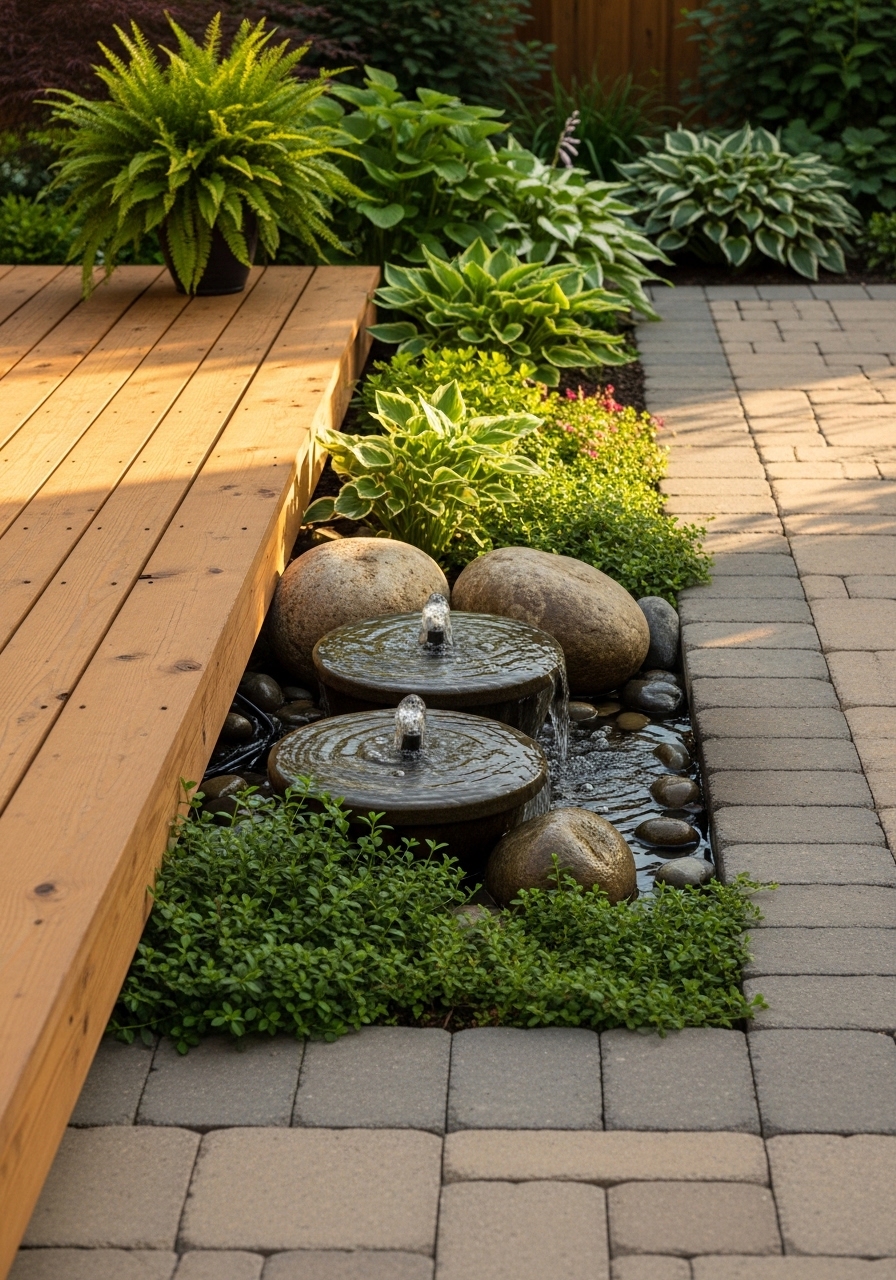
12. Water Feature as Centerpiece Between Deck and Patio
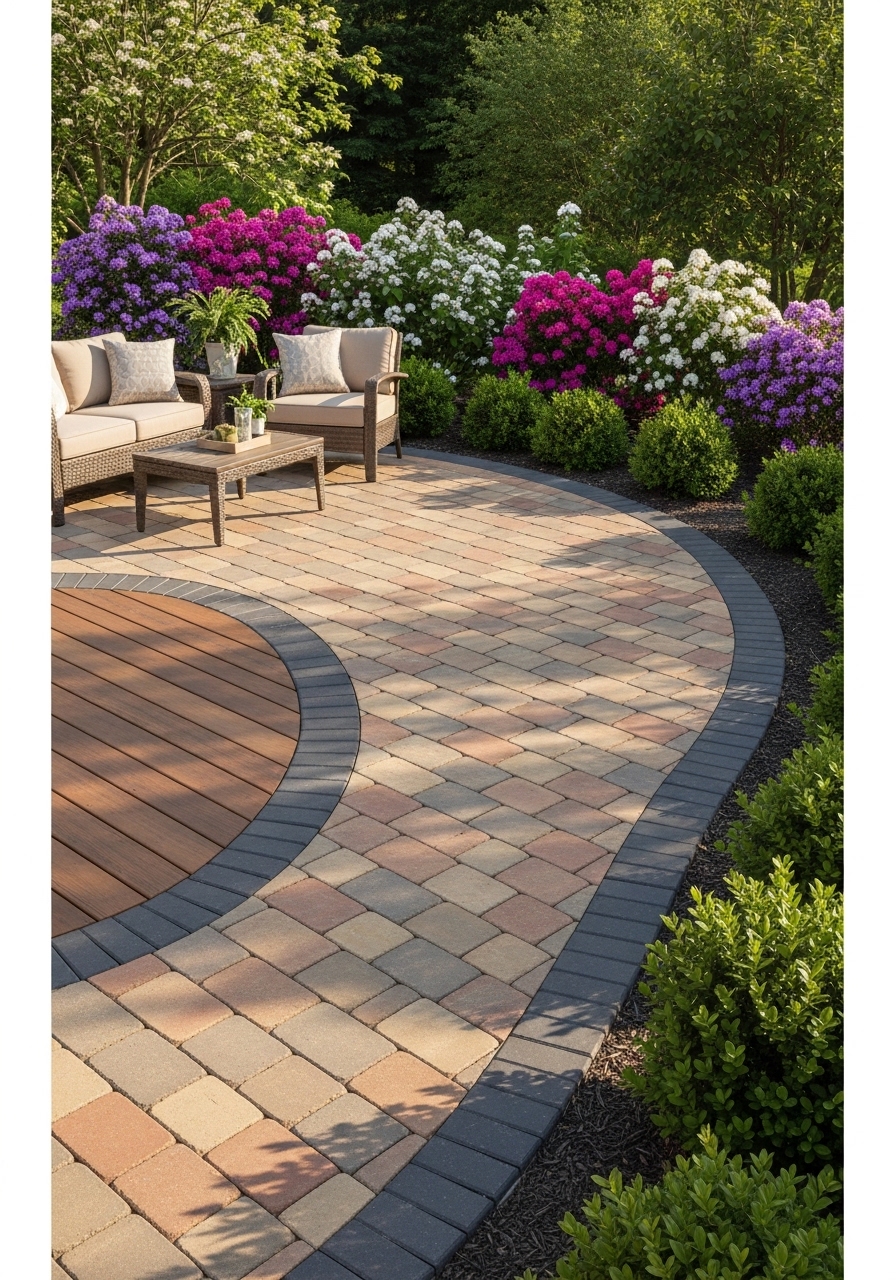
Add a small fountain or water feature positioned where deck and patio meet. Water features create focal points and draw people through the space. The sound and sight of water add sensory appeal and relaxation. Even a simple birdbath or small fountain makes impact. This becomes a natural gathering point that enhances backyard flow beautifully.
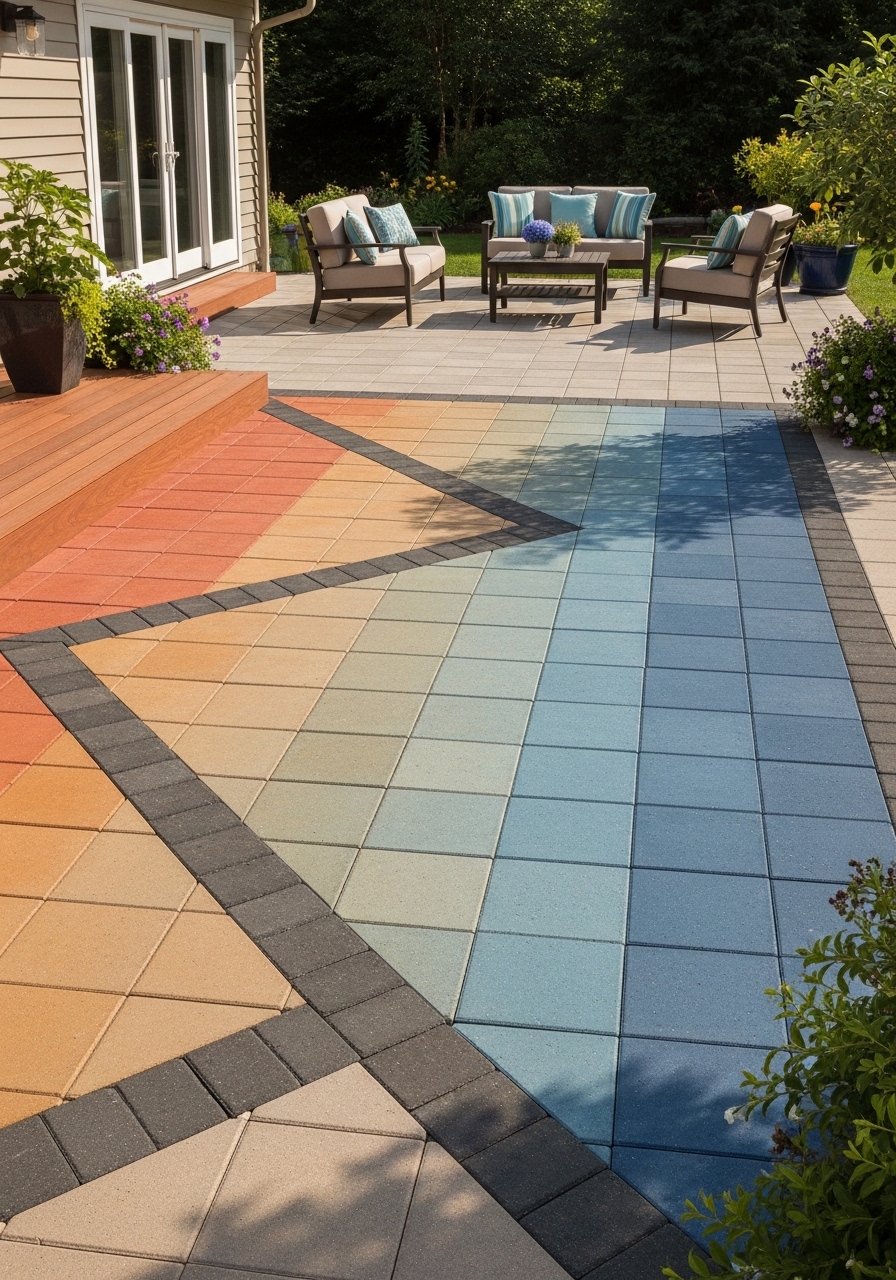
13. Gradual Color Gradient from Deck to Patio
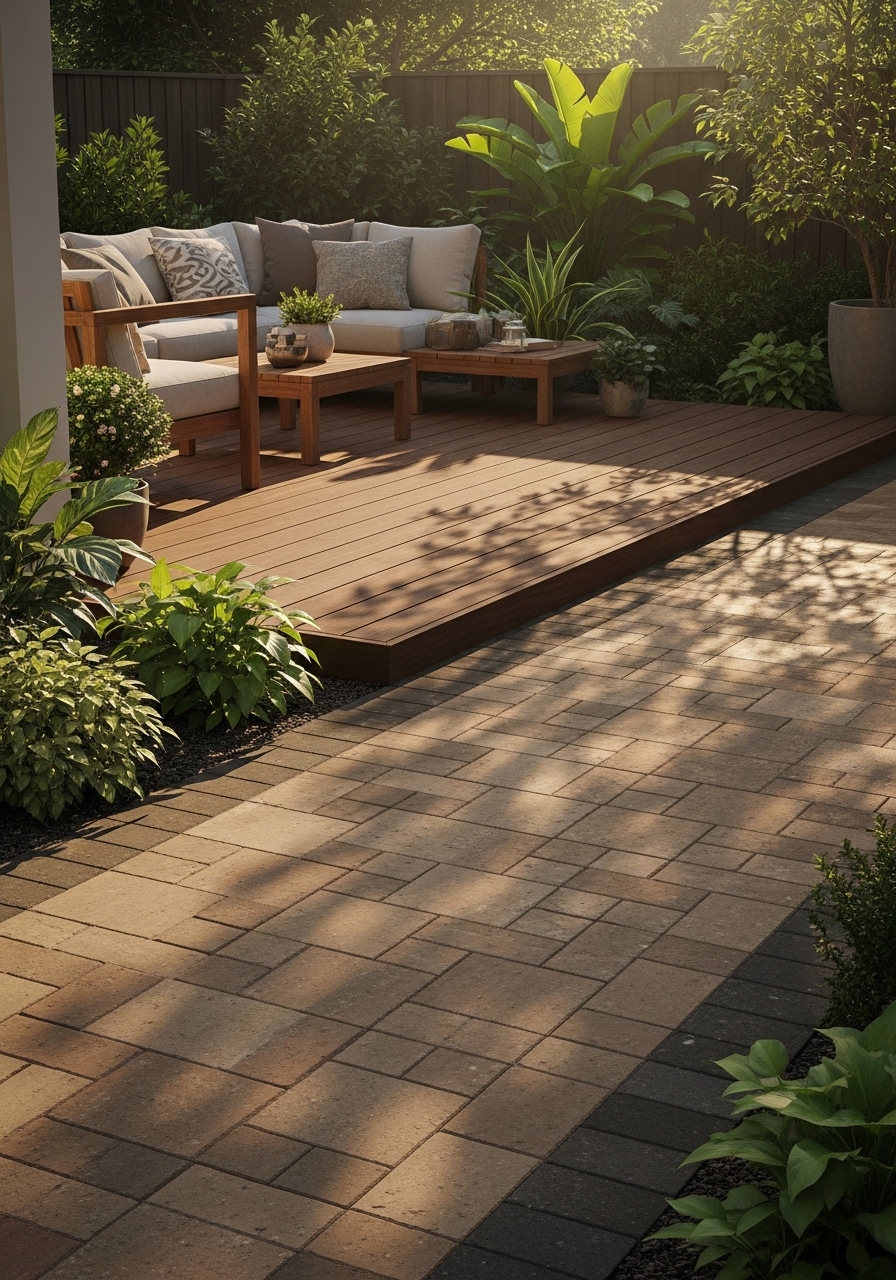
Transition paver colors gradually from your deck’s tone to a complementary shade across the patio. This creates visual flow like a gentle watercolor gradient. Gradual color change feels sophisticated and intentional. Start with deck-like tones and gradually shift across the space. This subtle effect ties everything together while adding beautiful, understated design interest.